This essay proposes a somewhat formulaic system for discussing and tracking fashion's norm deviation or reinforcement. I situate this within two 20th-century theorists: French sociologist/professor/theorist Jean Baudrillard and his commentary on late-stage capitalism and semiotics (per usual; I love him), as well as Russian philosopher and literary critic Mikhail Bakhtin's idea of the carnivalesque: a derivative concept based on 16th-century scholar François Rabelais's idea of the carnival—a humorous suspension of norms through festival, folklore, ceremonies, and overall departure from reality. This paper had a sharp page limit, so I gloss over these theorists more so than I do in other papers, but you get the gist.
I attempt to track this either-or function of fashion (as explained in the first sentence above) as we move further from Bakhtin/Rabelais's perceived reality toward Baudrillard's proposed hyperreality. This is expanded upon in the essay.
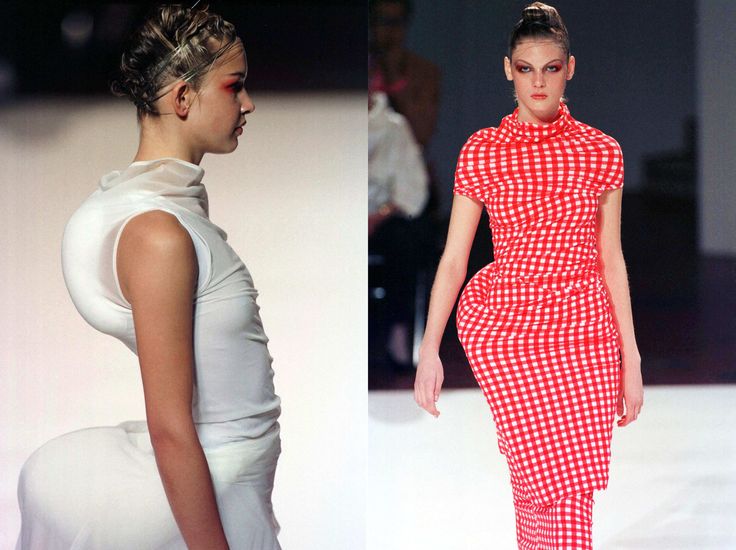
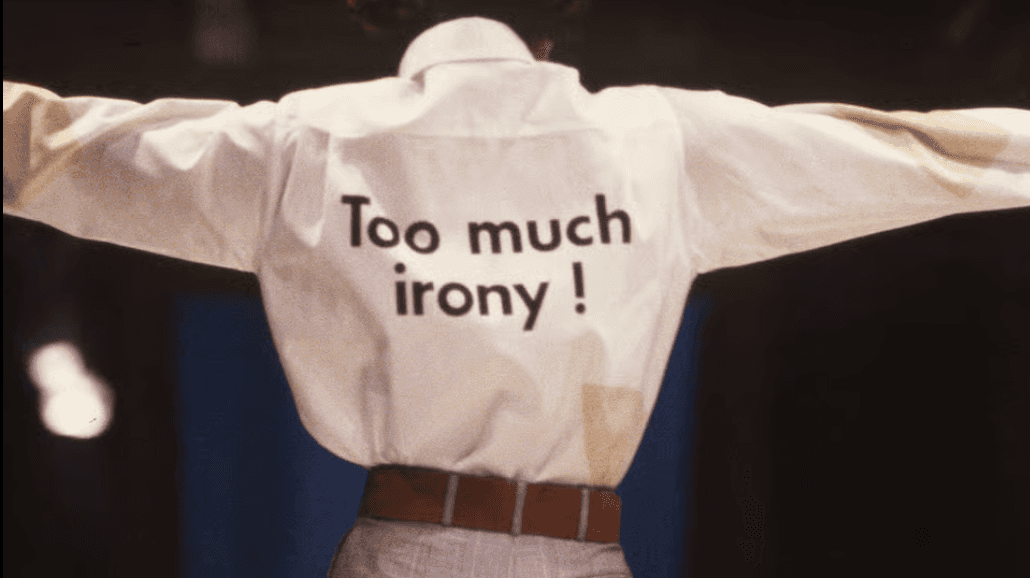
I follow designers such as Rei Kawakubo, Alexander McQueen, and A.Human to examine the containment of the fashion display, the audience's consent, and the reversibility of the look through an index I refer to as C-C-R. Through this, one can begin to predict whether a fashionable display reinforces or subverts social norms—something that is not always as straightforward as it appears.
This was somewhat of an experimental essay for me, toying with the quantification of a qualitative phenomenon and the unpredictability of an audience. I honestly do not know if I love this essay, but it was fun to write. You'll see in the conclusion that this operation only really holds up in this moment in time, and, as fashion becomes more simulcra-bound rather than spatiotemporal or historical, it will eventually be rendered obsolete.
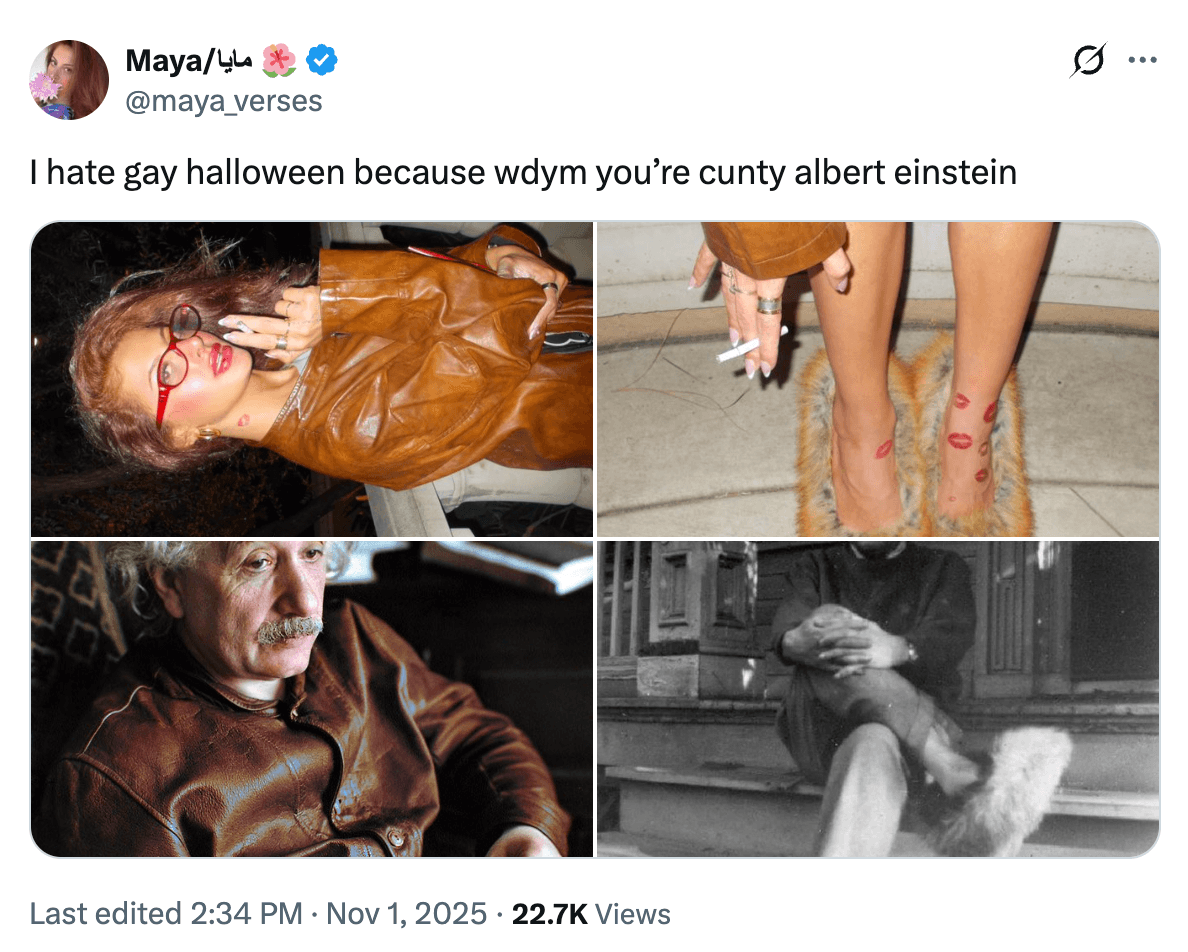
Best of all—I get to reference the all-time internet trend of "I hate gay Halloween because what do you mean you're dressed as XYZ." I got to say c*nty while presenting on this in class. My professor wasn't pleased. But I was! Sowwy prof <3
Here's the link. Xoxoxoxo