

Weird is Back. And that's Cool!
And thank God that it is.
And thank God that it is.
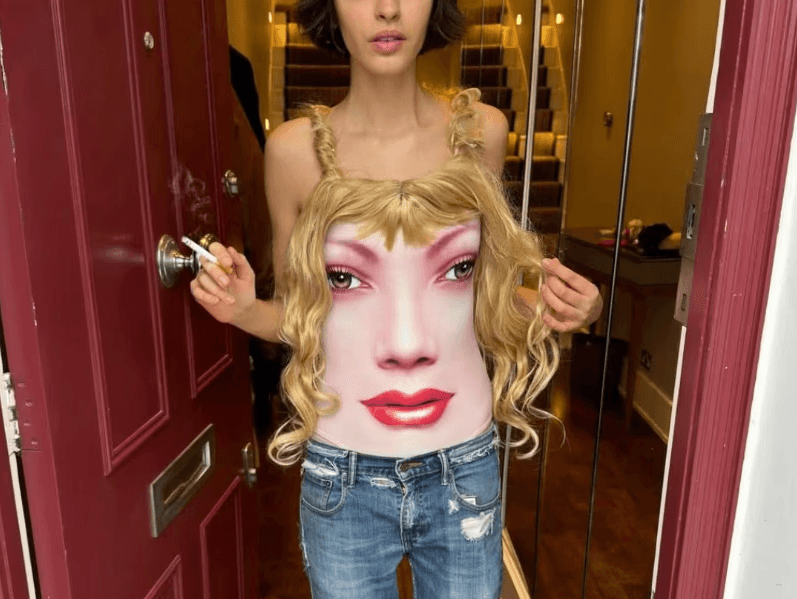
The world is falling apart. Fashion, characteristically, has found this very inspiring. In the madness of modern day, fashion is responding through escapism: The it-girl of 2025 was wearing hennin hats, mismatched tights, or literally trolling with her clothing—and she doesn’t particularly care which. She is every weird, contrasting, deliberately unflattering silhouette that has been slowly, then all at once, replacing a decade-plus of minimalist sanitization. Somewhere, a tear is rolling down a clean girl’s face, falling into her $60 Stanley Cup.
This is, depending on who you ask, either the death of the cool girl or simply proof that she may never have been that cool to begin with. Throughout the 2010s and COVID-19, she ran the feed: thin, white, dewy, neutral, effortless, expensively unbothered. And now, she is at risk (or pleasure) of being replaced—on runways, on TikTok, on the streets, in the curatorial philosophy of stylists like Parsons alums @nikkifinaa and @xeniamaysettel—by something that, finally, actually has a point of view. At her core, the Weird Girl is maximalist, yes, but not in the Instagram-feed way. She is particular. Idiosyncratic. Almost annoyingly difficult to replicate, which (and I mean this) is the whole point.
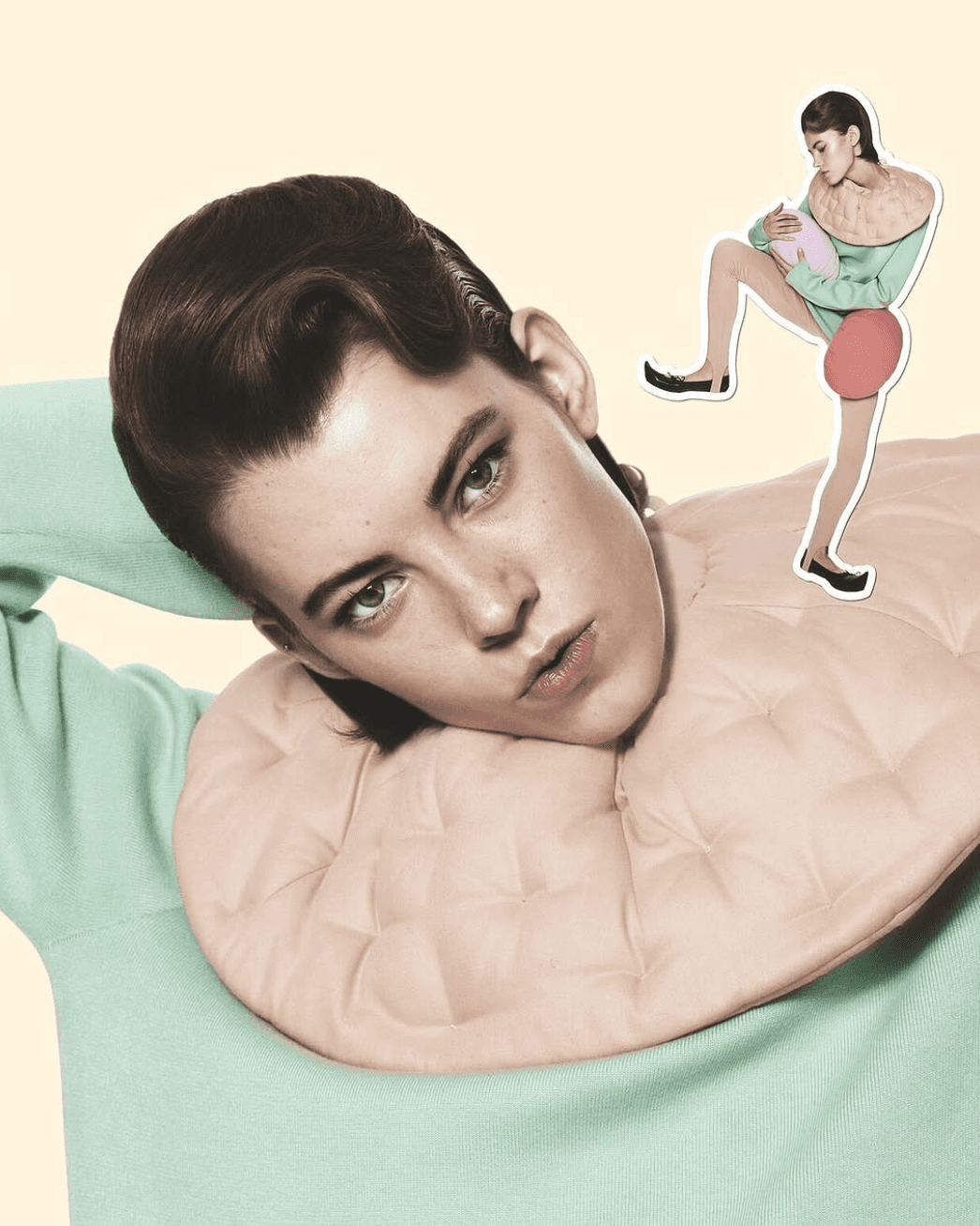
One of Settel's recent stylings.
In the days barren of subcultures and replaced by virality and microtrends, the Weird Girl is one of individuality, precision, personalization. She is as close to anti-fashion as someone in an algorithmic backdrop framed by aesthetics can be. I spoke to Jessica Glasscock about this, a Gen X curator at the Met’s Costume Institute and professor at Parsons. Her self-written author overview for her book Making a Spectacle: A Fashionable History of Glasses perhaps explains her better than I can: She is particularly keen on "the glorious triumph of gothness in contemporary culture. This is in no way related to a youth spent alone in her bedroom applying black eyeliner and listening to The Cure. Jessica denies such a youth ever took place." She adds: "While she loves to write and teach, she hopes to be remembered for being clever at dinner."
Over the past two decades—through the coda of subculture, wannabe goths of Tumblr (a pivotal point for her, as a self-proclaimed “old-school goth”), and the model-off-duty dilution of style altogether—she has taught a course called the Death of Cool. Glasscock has thoughts: “Cool is being born and dying every day, man,” she told me. “What is cool is that kind of ineffable thing. It’s like porn, you know? You know when you see it.” Her class takes its name from a thesis she returns to constantly: that the modern commercial fashion system is structurally, inherently, incapable of coexisting with cool. “Fashion eats everything,” she said. Her course tracks the process by which scenes and subcultures emerge, get consumed, and die off due to their own commercialization. It is, depending on your disposition, either a very depressing syllabus or a very astute one.
What she finds interesting about this particular moment is that even her students don’t believe subcultures exist anymore. What they do recognize are aesthetics, the -cores, the microtrends that send people tripping over themselves to buy whatever the algorithm decides is next. Glasscock’s read on these is not generous. “This is a psyop,” she said, bluntly. “You kids are clearly participating in a psyop.” Bot-driven, self-circulated, hollow at the center—the aesthetics era is, in her view, the fashion system doing what it always does: eating everything, just… faster. But the Weird Girl is different, she argues, because there is “a personality somehow attached.” It goes to the social side of the internet rather than the sponsored one. There is, refreshingly, a girl there. A personality.
Natasha Walia, a 24-year-old fashion studies student at Parsons, runs a small, curated resale business on the side; the kind where the collections have one-word eponymous direction like “Syllabus” and “Rolodex,” inspired by back-to-school and office-adjacent dressing—styled through a narrative, worn by those actually participating. She plays with androgyny, mostly wears men’s wear, and is deeply unbothered by what the algorithm thinks of any of it. She does not curate for the cool girl, she told me, and the reason is straightforward: “I think the ‘cool girl’ is synonymous with a thin girl, or even a white girl.” The cool girl aesthetic, in her mind, was never really a style at all, but extraction: “The cool girls are the people who took from subcultures without actually understanding where it came from or subjecting themselves to or learning about those groups. They kind of just want to take from them. And that’s how they become cool, because it’s seen outside of the culture.” Which is, when one says it plainly like that, a pretty good description of an entire decade of fashion mediation.
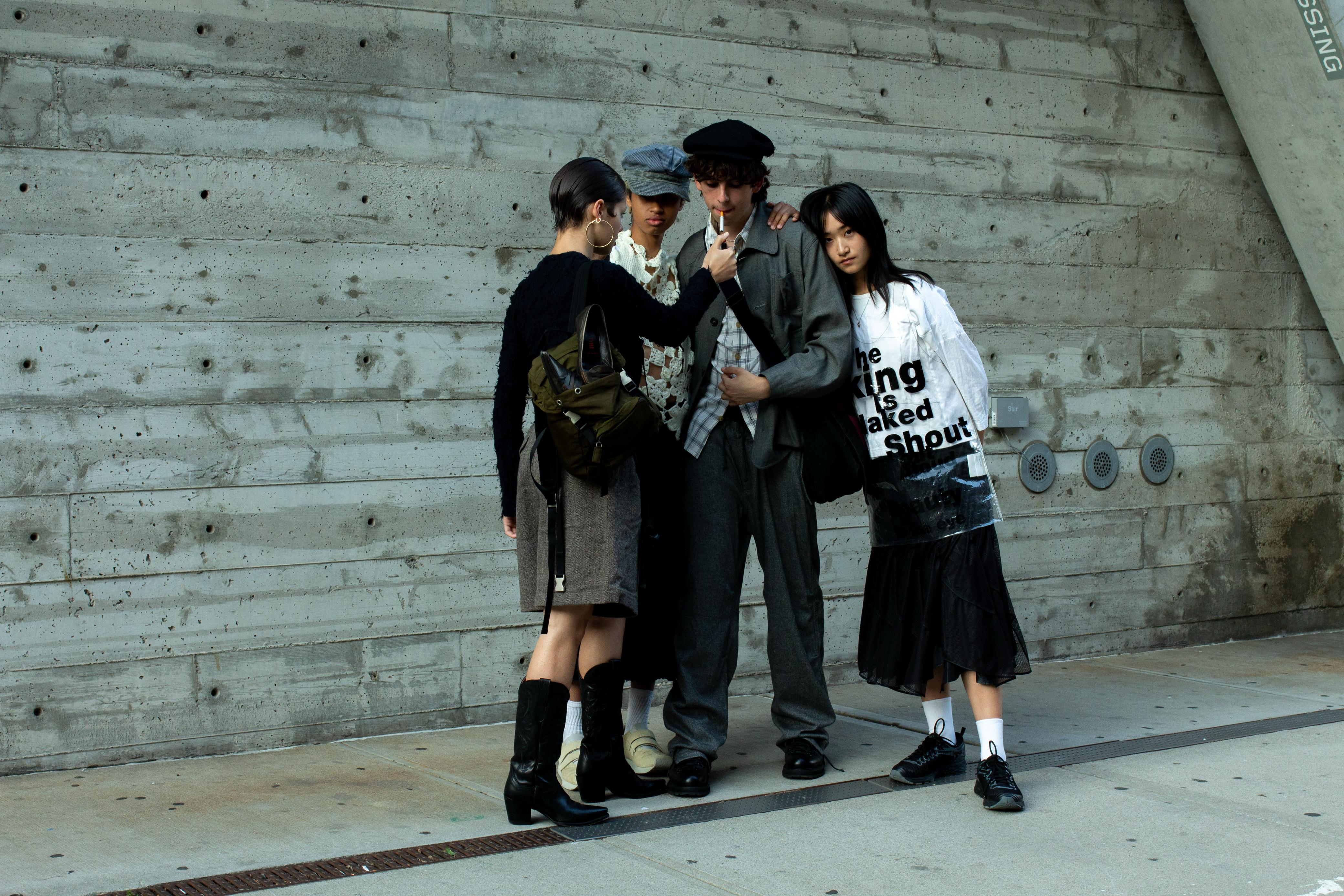
A still from Walia's "Syllabus" collection last year.
So, what is cool, beyond the colonization of girl? Walia’s definition is a demanding bravado: “Cool is synonymous with having a unique sense of individuality and confidence now,” she said. What she’s describing—and what I think the weird girl moment is actually about—is authenticity, with teeth. Not the performed authenticity of the clean girl, but the real kind: when you see someone, as Walia puts it, “really authentic in what they dress like and what they believe in. They don’t subject themselves to what’s around them.” They don’t care what’s weird or whether they’re subscribed. They know it when they see it. And that’s cool.
It’s like porn, as Glasscock would say. And, if fashion eats everything, it must no longer be able to stomach the bland.