

The Criminologist and the Milliner
Ursula Franco survived a defamation suit, a conviction, and decades of antisemitism. She named her vintage store after someone who survived worse.
Ursula Franco survived a defamation suit, a conviction, and decades of antisemitism. She named her vintage store after someone who survived worse.
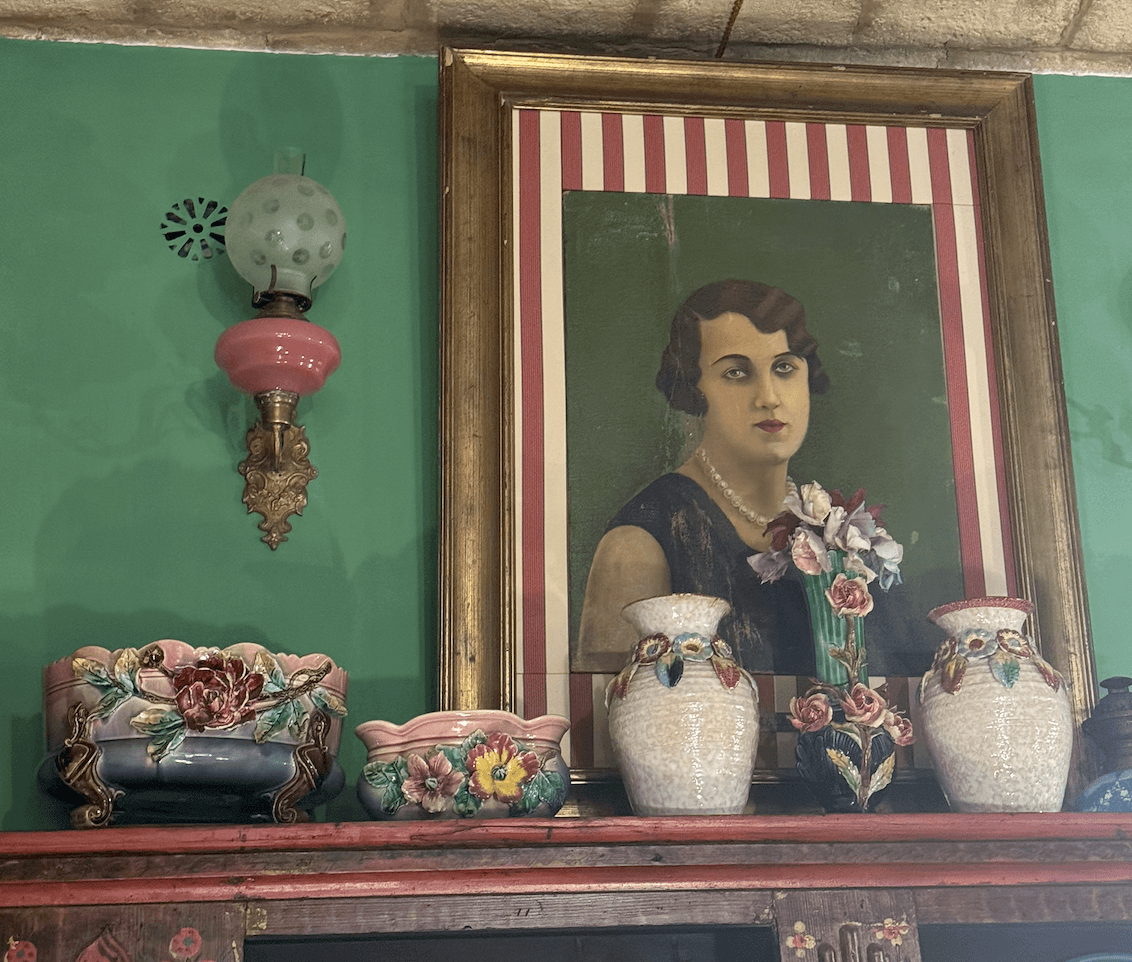
Ursula Franco’s vintage store in Rome isn’t named after her, though it could be. It has her fingerprints all over the place—literally. She painted the walls herself, restored every piece inside by hand, dragged the furniture in from flea markets, and arranged it with the compulsive precision of someone whose brain, as she puts it, never turns off. The store “is my brain,” she tells me, with an appropriately Italian pinched-hand gesticulation to show me that she means it. There’s something from every era and discipline here: clothing she has long collected, clothing she has recently sourced, hand-painted pottery, jewelry she makes, pots, pans, candles, baby onesies, you name it. But the store is also more than her—the eponym belongs to someone else: Malke Alpert. And that distinction is, it turns out, the whole story.
Ursula Franco is Italian, a PhD criminologist, a vintage dealer, a Sephardic Jew, a doctor, a convicted defamer (pending appeal), and a woman who, according to her, once had the first pair of New Balance sneakers in all of Italy. “People know everything about me because of the trial, and my mouth. I am an open book,” she says, with a chuckle.
The trial—the defamation suit that upended her career and eventually redirected the course of her life—is the kind of story that sounds, at first, almost comically minor: An academic degree-laden Ursula criticized a television show within her field, the television show’s journalists sued her, and a judge found her guilty. The fine was €400. “It’s a fine for if you do something bad with your car," Ursula says, disbelief still raw in her voice, six years after the case was brought. “It’s nothing. Destroy my life and my work as a criminologist, for just €400?” That, as Ursula would say, is the problem with Italy.
But to understand Ursula, to understand her store, you have to understand Malke.
Ursula wrote about her in a short piece in Italian she sent me after our interview, because she knew she’d cry reading it aloud. Malke Alpert was a milliner, Jewish—as is evident from her name, which means “queen” in Yiddish—and born in Yugoslavia. In 1943, barely more than a girl, she was arrested during a vacation in Italy and deported to Auschwitz-Birkenau. She survived. After the war, she moved to Milan, to an apartment alongside Ursula’s grandparents, Lyda and Cesare, and their two children, including Ursula’s father. Malke made hats for Lyda and cooked Ashkenazi pastries for the children—as though sweetness could make up for what both families had experienced in the Holocaust, as though it was something still deliverable. In summer, she let the numbers show on her left arm: A91122. These numbers now appear throughout Ursula’s store, on the walls and on little tchotchkes. A tribute, Ursula says.
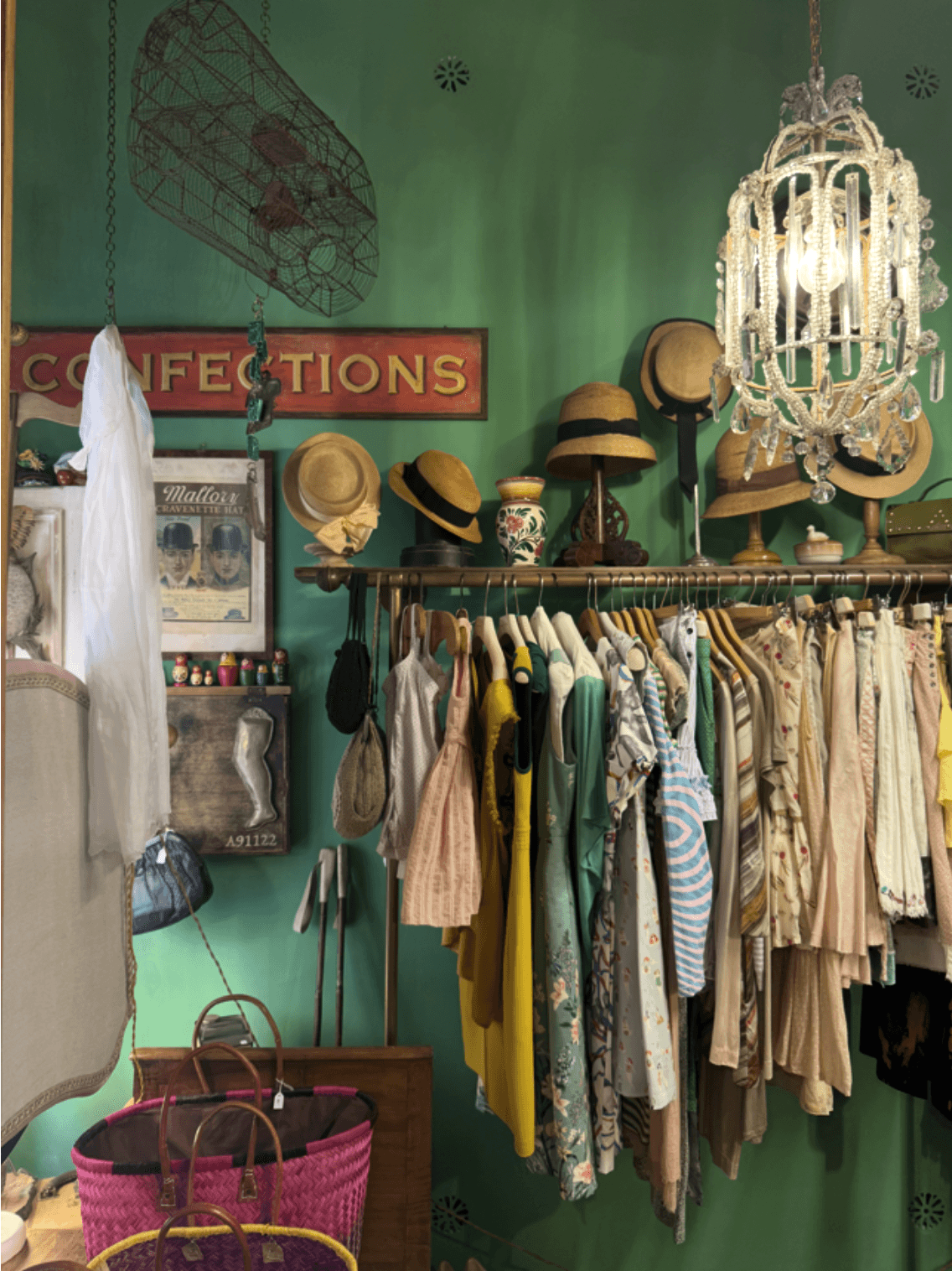
One of the walls in Ursula’s store, with Malke's number on the wooden box mounted to the left. Hats, naturally, to complete the tribute.
Ursula grew up hearing about Malke from her father. Though not too far in age from one another, Ursula’s father and Malke still had worlds-apart experiences during the Holocaust: The Francos had faked being Catholic during the war to keep the family alive, with Cesare acting as a part of I Partigiani and even keeping Ursula’s precariously sick father from a doctor, who would have seen his circumcision. They emerged relatively unscathed, carried on, and started their own families. But Ursula writes that she imagined that Malke had never married because of the stories about what the camp commander had done to her—having “taken a liking to her,” he summoned her to his quarters and assaulted her before burning her “under the table,” leaving her sterilized. The story of that poor surviving Jewish girl lacerated my heart, Ursula writes (in my translation), and even today, I must stop myself from letting the thought of those insidious violences pull me into a grief that takes away the sense of life.
The Francos are Sephardic, expelled from Spain five centuries ago when Isabella the Catholic drove the Jews out during the Inquisition. They have been in Italy long enough that Ursula’s grandfather sold fabric to King Victor Emmanuel III, who vacationed near their shop on the Tuscan coast. “We are Italian,” Ursula said, when I observed that fashion and history seem to run through her family like a thread. “Of course it does.” She said it as though no further explanation was required.
But her tone about her family’s experience changes at the end of the piece about Malke: Finally, I’ll reveal a secret: the greatest pain of my grandparents was not the Holocaust, interpreted by optimists as a monstrous but unrepeatable event, but the antisemitism that followed it.
Ursula grew up in Tirrenia, on the beach, in a town that was half-American. After the war, the U.S. military set up camps along the coast, and the town ran on both dollars and lira, celebrated the Fourth of July, and held winter windsurfing competitions. She was a tomboy without shoes. Her father was the chief of the Pisa community, liked, known, and accessible. But she was also being shaped by something older, an aftertaste that still lingered after WWII. The family received “bad phone calls”—history’s great euphemism for antisemitic threats—and today, some customers still take issue with her identity, obvious through the Magen David she wears daily and known by the notoriety of her trial. But Ursula doesn’t argue. “There is nothing to say,” she tells me, with a shrug. “We Italian Jews risk bad words,” she says. “But you American Jews risk your life. People have guns.” She laughs.
Ursula went everywhere after Tirrenia—Buffalo, Casablanca, Paris, a prison island off the Tuscan coast called Gorgona, where she was the prisoners’ doctor and where her passion for criminology calcified into a vocation. She earned her PhD in Rome, built a career on high-profile cases, studied statement analysis under a professor in Maine. Forty years spent learning how to locate truth inside language.
Le Iene (The Hyenas) is one of Italy’s most watched and most controversial programs, a hybrid of investigative journalism and entertainment that has long styled itself as a watchdog. Ursula, who had spent her career watching what happens when public pressure infects judicial proceedings, gave an interview to Le Cronache Lucane, a regional Italian news outlet based in Basilicata. She said Le Iene was not journalism but entertainment. She said these shows destroy lives. She said, with clinical precision, that “these journalists have a disease. They are psychopaths. A diagnosable lack of empathy.” Le Iene sued her for defamation. She was found guilty at the first degree.
“In Italy,” Ursula says, “there is a problem with the truth. But I cannot be silent if I see the truth,” she says. “So I still speak.” But she uses different words now. She is scared in ways she wasn’t before. “People who have no competence can speak,” she says, with genuine bewilderment. “But me, I can’t?”
Ursula opened the store just over three years ago to withstand the lead-up to the verdict. “I had very bad energy, very compressed. I didn’t want to live anymore,” she says. Starting from scratch with old furniture and garments, Ursula restored everything by hand. I asked if it was a meditative experience. “It was a rage,” she retorted. “I thought about Malke the whole time.” So she gave the shop her name—and then bought old furniture and stamped it: Malke Alpert, Rue de Choiseul, Paris, 1932. A fiction. A paean. A place for a woman who lost everything to have something, retroactively. “I gave maybe a soul to the shop, to Malke. The people—not everybody knows, but they feel, no?”
They feel indeed. Buyers from Jil Sander have come. A Claude Montana skirt sold recently. Jewish clients, like myself, coincidentally stumble in. “You know, when you choose the job you love, it’s your hobby and your job,” she says. “And I love everything.” She pauses. “I am very curious.” She says this last part like it explains everything. And maybe, when you’ve spent forty years turning curiosity into a career, endured a defamation suit, opened a store for a Holocaust survivor who never got to have one, and are currently drinking tea from a cup made in the 1940s, as I drink coffee from a flimsy glass I got on Amazon while we connect over WhatsApp—maybe it does.
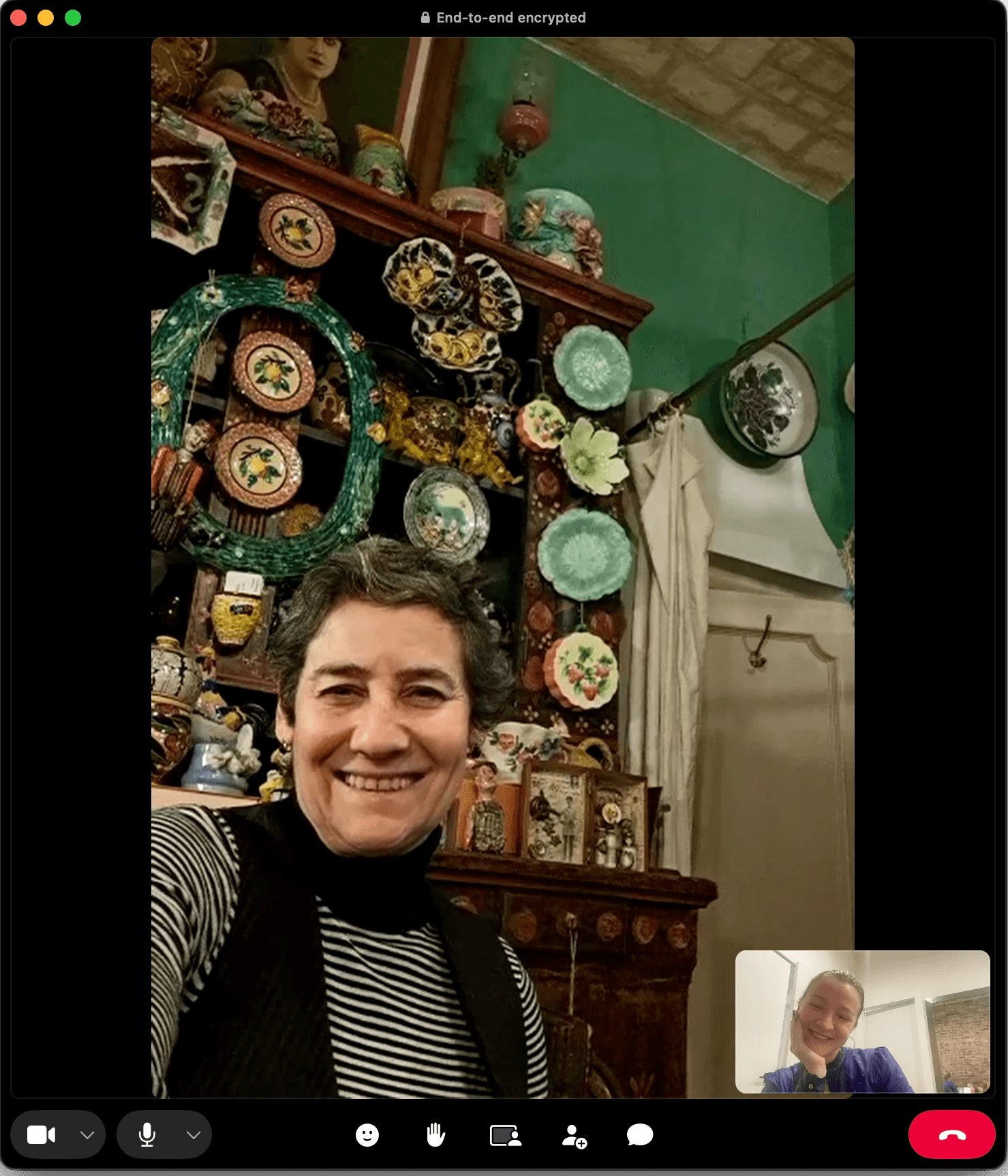
Malke Alpert is located in Rome, and business is going well. Ursula Franco is currently appealing her defamation conviction. She is still taking cases.